TRACE
A private, local-first workspace for OSINT investigations and link analysis. Every entity, relationship and note lives on the analyst's own machine as plain Markdown.
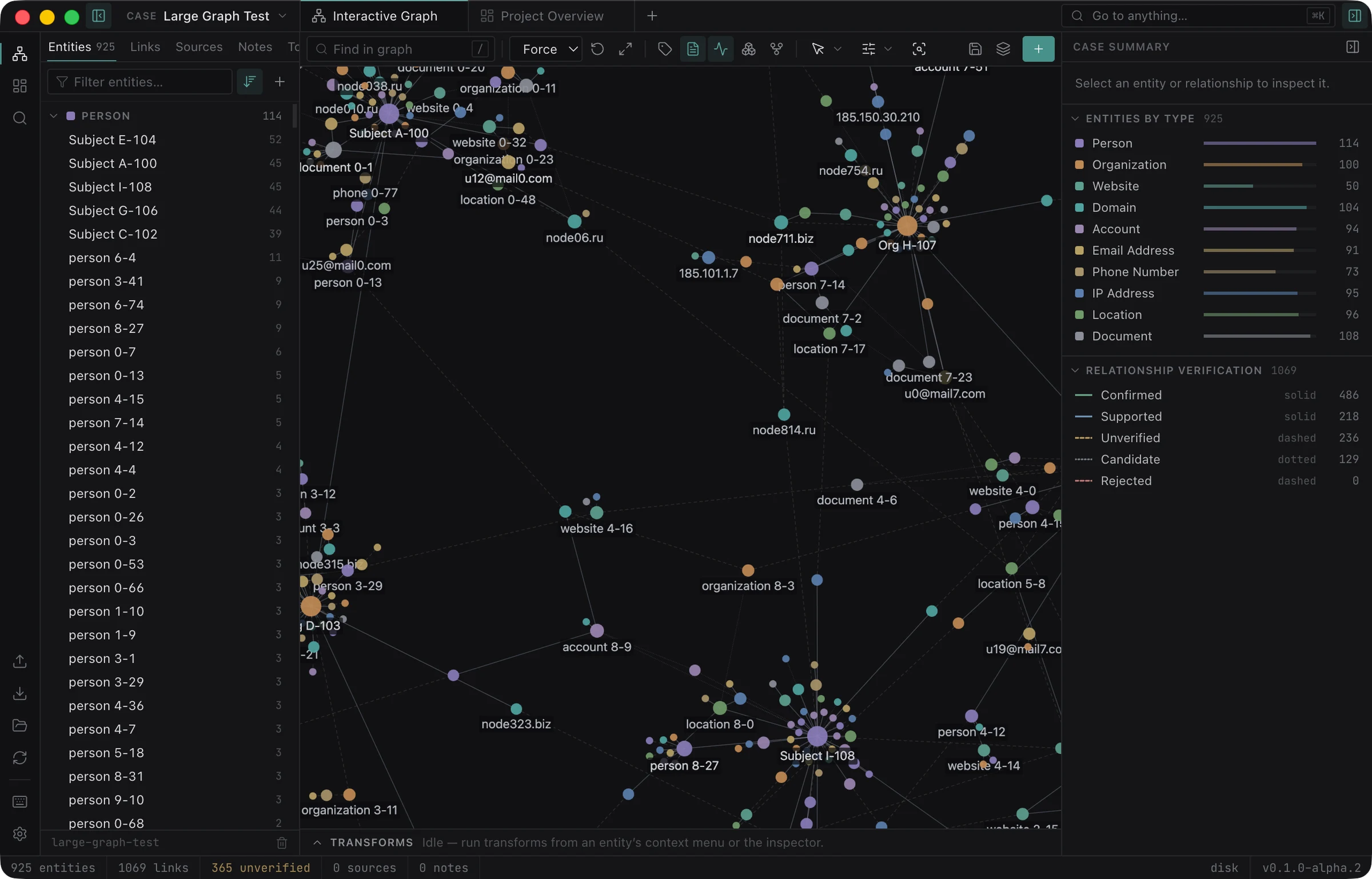
TRACE is for analysts, researchers and forensic investigators who map networks of people, companies, domains, IP addresses and crypto wallets.
Work like that is sensitive, so nothing leaves the machine: no cloud sync, no telemetry, and it can run fully air-gapped.
The project folder is the database
Entities, relationships, sources and notes are separate Markdown files with YAML frontmatter, so a case stays readable in any editor and works with Git. Graph positions sit next to them in graph-layout.json, and a project exports as a standalone .zip.
Search runs inside the app
SQLite runs as WebAssembly on the client, with FTS5 indexing entity names, aliases, attributes, tags, relationships and raw Markdown.
Suggested links stay unverified
Find Links scans for shared surnames, normalized phone numbers and emails, corporate mail domains, IP addresses, employers and identifiers. Matches arrive as unverified candidates with a confidence score, and the analyst confirms them on the graph.
A graph you work in
The Cytoscape canvas offers CoSE, concentric and breadth-first layouts and remembers node positions between sessions. Press C and drag between two nodes to connect them, and [[wikilinks]] in notes appear as dashed mention edges.
Requests outside the browser sandbox
The built-in API console sends requests through Electron IPC, which avoids browser CORS limits. A response can be attached to an entity as a source, a note or an attribute.